The year 2025 will reward businesses that embrace modern platforms such as WooCommerce and Shopify, while those that delay risk falling behind. Let’s explore why upgrading your digital infrastructure is crucial, and how working with professional ecommerce web developers and ecommerce app developers can future-proof your business.
Several forces are converging to reshape the business landscape in Australia, making 2025 a make-or-break year for many SMEs:
AI is no longer limited to large enterprises. SMEs now have access to affordable AI-powered tools that can
This levels the playing field, but only for SMEs who have a modern ecommerce website development setup capable of integrating these tools.
With rising energy, supply chain, and staffing costs, SMEs must do more with fewer resources. Automating repetitive tasks—like inventory management, customer reminders, and email marketing—frees up time to focus on growth.
SMEs form the backbone of Australia’s economy, but many lag behind in digital adoption. The businesses that act now will enjoy:
In short, ecommerce website development, paired with expert ecommerce web developers and ecommerce app developers, is no longer optional—it’s the foundation for resilience.
With rising energy, supply chain, and staffing costs, SMEs must do more with fewer resources. Automating repetitive tasks—like inventory management, customer reminders, and email marketing—frees up time to focus on growth.
Australia is tightening data security and digital compliance laws. Businesses that fail to update their websites risk not only poor performance but also potential fines. Working with a skilled website agency Melbourne or ecommerce developer ensures compliance with these evolving rules.
Modern shoppers are unforgiving. They expect:
Failing to deliver these can result in abandoned carts, lower conversions, and long-term customer churn.
To keep pace, SMEs need reliable ecommerce website development backed by professional expertise.
A strong online store is more than just a sales channel—it’s the backbone of a resilient digital economy. By investing in ecommerce website development, businesses can:
A professionally developed store helps SMEs sell across Australia and globally. For instance, a Melbourne-based boutique clothing store can attract customers from Sydney, Singapore, or even London with the right ecommerce setup.
Mobile commerce is booming. By 2025, mobile purchases are expected to surpass desktop. Responsive design ensures customers enjoy seamless experiences across devices.
Today’s consumers love flexibility. Options like “Buy Online, Pick Up In Store” (BOPIS) are no longer optional. With integrated POS and ecommerce solutions, SMEs can streamline sales, inventory, and customer data in one system.
From abandoned cart recovery emails to automated order tracking, expert developers can set up tools that run 24/7—scaling your business without scaling costs.
DIY platforms like Shopify and WooCommerce make it tempting to go solo. However, partnering with a professional ecommerce web developer ensures your store is future-ready, secure, and optimised.
Benefits of hiring an expert include:
This difference often determines whether a business merely “has a website” or actually drives sales and growth through ecommerce website development.
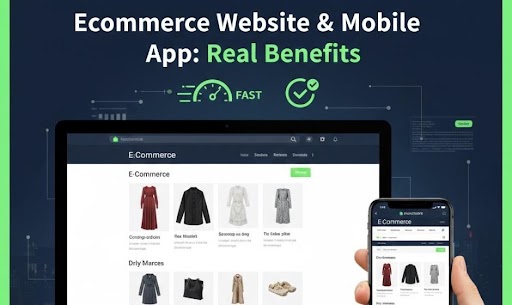
Beyond websites, mobile apps are shaping the future of ecommerce. Research shows customers spend 3x more time on mobile apps than mobile browsers.
Working with ecommerce app developers can give SMEs an edge with:
Imagine a small Melbourne coffee roaster launching an app where customers can subscribe to monthly bean deliveries, track orders, and earn loyalty points—all in one place. That’s the kind of engagement that builds long-term loyalty.
SMEs form the backbone of Australia’s economy, but many lag behind in digital adoption. The businesses that act now will enjoy:
In short, ecommerce website development, paired with expert ecommerce web developers and ecommerce app developers, is no longer optional—it’s the foundation for resilience.
Here are five actionable strategies SMEs can adopt today:
Work with experts who understand both design and optimisation.
Every second of load time costs conversions; optimise for both speed and visibility.
Sync your website, app, and POS system for seamless shopping.
From chatbots to predictive analytics, use tools to work smarter.
Ensure both your website and mobile app deliver smooth, engaging user experiences.
The digital economy is evolving at lightning speed. Australian SMEs cannot afford to wait. Investing in ecommerce website development, speed optimisation, POS integration, and automation ensures your business remains competitive in a shifting market.
2025 belongs to businesses that adapt. Make your online presence stronger, faster, and smarter—because resilience in the digital economy starts with ecommerce.